Sunday, April 19, 2015

How to Create a Logo

With a well-designed logo, potential clients can instantly discover how your business can serve them. 


Your logo is a visual representation of everything your company stands for. Think of McDonald's golden arches or the Nike swoosh-these two impressive logos embody these companies well. But many companies still skimp on developing this key identity piece.
Ideally, your company logo enhances potential customers and partners' crucial first impression of your business. A good logo can build loyalty between your business and your customers, establish a brand identity, and provide the professional look of an established enterprise.
Consider Allstate's "good hands" logo. It immediately generates a warm feeling for the company, symbolizing care and trust. With a little thought and creativity, your logo can quickly and graphically express many positive attributes of your business, too.


Logo Types

There are basically three kinds of logos. Font-based logos consist primarily of a type treatment. The logos of IBM, Microsoft and Sony, for instance, use type treatments with a twist that makes them distinctive. Then there are logos that literally illustrate what a company does, such as when a house-painting company uses an illustration of a brush in its logo. And finally, there are abstract graphic symbols-such as Nike's swoosh-that become linked to a company's brand.
"Such a symbol is meaningless until your company can communicate to consumers what its underlying associations are," says Americus Reed II, a marketing professor at the University of Pennsylvania's Wharton School, who's conducted research on the triggers that lead consumers to identify with and become loyal to a brand. But building that mental bridge takes time and money. The Nike swoosh has no inherent meaning outside of what's been created over the years through savvy marketing efforts that have transformed the logo into an "identity cue" for an athletic lifestyle.
Growing businesses can rarely afford the millions of dollars and years of effort required to create these associations, so a logo that clearly illustrates what your company stands for or does may be a better choice. Even a type treatment of your company's name may be too generic, says Placitas, New Mexico, logo designer Gary Priester, principal of gwpriester.com, the Web arm of design firm The Black Point Group. Priester believes customers should be able to tell what you do just by looking at your logo.

Getting Started

Before you begin sketching or learning how to design a logo, first articulate the message you want your logo to convey. Try writing a one-sentence image and mission statement to help focus your efforts. Stay true to this statement while creating your logo.
But that may not be enough to get you started. Here are some additional tactics and considerations that will help you create an appropriate company logo:
  • Look at the logos of other businesses in your industry. Do your competitors use solid, conservative images, or flashy graphics and type? Think about how you want to differentiate your logo from those of your competition.
  • Focus on your message. Decide what you want to communicate about your company. Does it have a distinct personality-serious or lighthearted? What makes it unique in relation to your competition? What's the nature of your current target audience? These elements should play an important role in the overall design or redesign.
  • Make it clean and functional. Your logo should work as well on a business card as on the side of a truck. A good logo should be scalable, easy to reproduce, memorable and distinctive. Icons are better than photographs, which may be indecipherable if enlarged or reduced significantly. And be sure to create a logo that can be reproduced in black and white so that it can be faxed, photocopied or used in a black-and-white ad as effectively as in color.
  • Your business name will affect your logo design. If your business name is "D.C. Jewelers," you may wish to use a classy, serif font to accent the letters (especially if your name features initials). For a company called "Lightning Bolt Printing," the logo might feature some creative implementation of-you guessed it-a lightning bolt.
  • Use your logo to illustrate your business's key benefit. The best logos make an immediate statement with a picture or illustration, not words. The "Lightning Bolt Printing" logo, for example, may need to convey the business benefit of "ultra-fast, guaranteed printing services." The lightning bolt image could be manipulated to suggest speed and assurance.
  • Don't use clip art. However tempting it may be, clip art can be copied too easily. Not only will original art make a more impressive statement about your company, but it'll set your business apart from others.
  • Avoid trendy looks. If you're redesigning your old logo, you run the risk of confusing customers-or worse, alienating them. One option is to make gradual logo changes. According to Priester, Quaker Oats modified the Quaker man on its package over a 10-year period to avoid undermining customer confidence. But don't plan to make multiple logo changes. Instead, choose a logo that will stay current for 10 to 20 years, perhaps longer. That's the mark of a good design. In fact, when Priester designs a logo, he expects never to see that client again.

Watch Your Colors

One thing you need to be careful of as you explore color options is cost. Your five-color logo may be gorgeous, but once it comes time to produce it on stationery, the price won't be so attractive. Nor will it work in mediums that only allow one or two colors. Try not to exceed three colors unless you decide it's absolutely necessary.
Your logo can appear on a variety of media: signage, advertising, stationery, delivery vehicles and packaging, to name just a few. Remember that some of those applications have production limitations. Make sure you do a color study. Look at your logo in one-, two- and three-color versions.

Hire a Designer

While brainstorming logo ideas by yourself is a crucial step in creating your business image, trying to create a logo completely on your own is a mistake. It may seem like the best way to avoid the high costs of going to a professional design firm, which will charge anywhere from $4,000 to $15,000 for a logo design. Be aware, however, that there are thousands of independent designers around who charge much less. According to Stan Evenson, founder of Evenson Design Group, entrepreneurs on a tight budget should shop around for a designer. "There are a lot of [freelance] designers who charge rates ranging from $15 to $150 per hour, based on their experience," he says.
But don't hire someone just because of their bargain price. Find a designer who's familiar with your field . . . and with your competition. If the cost still seems exorbitant, Evenson says, "remember that a good logo should last at least 10 years. If you look at the amortization of that cost over a 10-year period, it doesn't seem so bad."
Even if you have a good eye for color and a sense of what you want your logo to look like, you should still consult a professional designer. Why? They know whether or not a logo design will transfer easily into print or onto a sign, while you might come up with a beautiful design that can't be transferred or would cost too much money to be printed. Your logo is the foundation of all your promotional materials, so this is one area where spending a little more now can really pay off later.

Using and Protecting Your Logo

Once you've produced a logo that embodies your company's mission at a glance, make sure you trademark it to protect it from use by other companies. You can apply for a trademark at the U.S. Patent and Trademark Office Web site.
Then, once it's protected, use it everywhere you can-on business cards, stationery, letterhead, brochures, ads, your Web site and any other place where you mention your company name. This will help build your image, raise your company's visibility and, ideally, lead to more business.
Creating a logo sounds easy, doesn't it? It can be. Just remember to keep your customers and the nature of your business in mind when you put it all together. In time, you'll have succeeded in building equity in your trademark, and it will become a positive and recognizable symbol of your product or service.

Thursday, April 16, 2015

Why CIOs can’t sell enterprise collaboration tool

Collaboration platforms offer the promise to eliminate unnecessary meetings, phone calls and other time-consuming interactions. However, to succeed those tools have to perform better than the incumbent, which for most people is still email.


Enterprise collaboration is a dubious pursuit. You can almost sense its impending failure the minute it gets introduced to a workforce and becomes just another tool that employees are supposed to use.
It doesn’t help when CIOs downplay the value of collaboration tools by simply procuring something that meets the lowest common denominator and enables them to check another item off their to-do list.

“There’s a lot of failures in enterprise collaboration, loosely termed, because people don’t really know what they’re aiming for so obviously they don’t hit it,” says Joel Confino, CEO and founder of the enterprise Q&A platform Haydle.

The promise of collaboration is to replace face-to-face communication, but if the implementation isn’t well-planned, it can’t become something extra that people have to do, Confino says. Collaboration also has to perform better than the incumbent, which is email for most people.

CIOs must lead by example

CIOs can’t merely launch a tool and tell employees to go forth and collaborate. The C suite needs to lead by example and use these new tools to accomplish meaningful business objectives.
“The majority of these implementations are underperforming and plenty of them are just outright ghost towns,” says Confino.

Why these tools are failing to supplant a technology as static as email is a question vexing the minds of countless IT managers. The reason for enterprise collaboration is still so hazy that relatively few CIOs agree on what challenges lie ahead.

CIOs and other IT decision makers face a host of challenges in their pursuit of enterprise collaboration, some of which are ingrained into the culture of their companies. Resistance to change is the obstacle facing CIOs at most companies and the reasons could include anything from workplace culture to perceived cost and complexity, says Scott McCool, group vice president of IT and CIO at Polycom.

Collaboration continues beyond office walls

One of the biggest challenges is determining how to implement enterprise collaboration in cross-functional manner, says John Abel, senior vice president of IT at Hitachi Data Systems,
“Teams are pretty good at communicating within their own group but when it comes to integrating across departments silos tend to happen, which ultimately becomes problematic when each team needs to align on certain campaigns or key topics,” he says.
NetScout’s CIO and Senior Vice President of Services Ken Boyd says the landscape of collaboration tools available today makes it difficult to pick the best ones for a specific workforce.
“Locating a collaboration tools provider that can offer the right balance for the needs of our enterprise users can be a significant challenge,” he says. There are many point solutions for voice, video, chat and document collaboration, but splicing together those solutions from multiple vendors isn’t always the most productive or cost -effective method.
.

CIOs should pick tools that address specific needs

Landing at the best solution requires critical thinking and planning, and time to investigate, assess, negotiate, evaluate and integrate, says Boyd, adding that it’s important for CIOs to pick the right provider from the start.
“There is an atomic shift taking place in how the enterprise operates, and so the CIO and CIO's team must decide whether [on-]premises and cloud-based collaboration tools can and will address the needs of the enterprise users -- anytime, anywhere, and on any device -- plus smoothly work between business and consumer applications,” says Boyd.

CIOs must also navigate and please the different age groups, says Chris McKewon, founder and CEO of the managed services provider Xceptional Networks

Millennials are more comfortable with video, short messaging and have embraced newer collaboration tools like Slack and HipChat while older execs are still trying to master WebEx and GoToMeeting, and unfortunately there’s no common ground, McKewon says.
“CIOs need to shift their mindset, strategies and projects to be more inclusive and collaborative,” says Shamlan Siddiqi, vice president of architecture and application development at the systems integrator NTT Data.

The biggest challenges, according to Siddiqi, are organizational buy-in on major transformational decisions, employee adoption, sustainable engagement, security, content quality, standardization and tool selection.

Collaboration drives results with impact

Brian Pillar, IT manager at the software firm TechSmith, agrees that adoption is a major challenge. Enterprise collaboration tools rarely come cheap, so making sure the organization rallies around the new platform is key.
Organizations will never realize their return on investment for collaboration until individuals or teams stop creating workarounds to avoid an enterprise collaboration tool altogether, says Pillar.

Ruven Gotz, director of collaboration services at the IT solutions vendor Avanade, says collaboration is about helping people work together to achieve more meaningful and impactful outcomes.
As such, the biggest challenges lie in approaching collaboration with the right mindset, he says.
“Technology is an amplifier of human touch and interaction. Its effectiveness in enabling collaboration is entirely dependent on achieving results with methods that make sense to the way people actually accomplish work,” says Gotz
“You really have to understand the true nature of the business results you seek to achieve,” says Gotz.
If you can’t see the business result you seek to achieve, take the time to stop and find it. If you can’t rationalize a process that is simple to understand, don’t try to automate it, he says.
“Understand what the tool imposes on the experience,” says Gotz. “Don’t let the tool bind natural human interaction.”


Tuesday, April 14, 2015

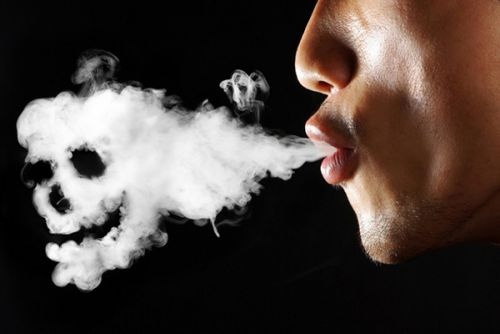
Researchers find no significant change in smokers' habits after smoking ban

Smokers have become accustomed to stepping outside at bars and restaurants. But has the change in rules governing enclosed public places inspired enough of them to smoke less behind their own closed doors or maybe even quit altogether?

These questions were posed in research recently published in Nicotine & Tobacco Research, in which a team that included Sylvia Kairouz of Concordia University found no significant change in home habits in the aftermath of a ban. But the measures could have an impact in more complex ways.


"What distinguishes people who restrict smoking at home is the presence of a non-smoker," says Kairouz, an associate professor in Concordia's Department of Sociology and Anthropology. "The social network seems to be more of a factor than the law."


With advance knowledge of a smoking ban in Quebec, Canada that took effect in May 2006, researchers were able to collect data from a representative cross-section of the population a month ahead of time. They then followed up a year and a half later.

Naturally, growing awareness of the health impact of secondhand smoke contributed to the stricter laws, although a number of those who kept puffing at home claimed to be trying to reduce nicotine exposure to others, even if those strategies for quitting are generally futile.
"The popular belief is that opening windows or doors to blow out smoke makes it OK, when that's not the case," Kairouz says. 

"People might be sensitive to the issues, but there was a lack of information about how the effects of second-hand smoke are transmitted."

Greater inspiration to kick the habit likely comes from having friends or family who set an example by giving up cigarettes themselves. 

But trends over the past decade suggest a much broader range of factors have reduced the number of nicotine addicts beyond simply forcing smokers to huddle outdoors more often.

Sunday, April 12, 2015

Top 10 London Attractions ~ things to do

Top 10 most popular tourist attractions, based on  visitor numbers. 


 Top 10 London Attractions video From the modern London Eye to the historic Tower of London, below are London's most visited tourist attractions. 


 Many of London's top 10 attractions are free, making them affordable places to soak up some culture – you can book to visit others via the buttons below.

Whether you prefer history or modern art, you'll find it at one of these must-visit spots.


The list below is in order of popularity based on the latest available visitor numbers.


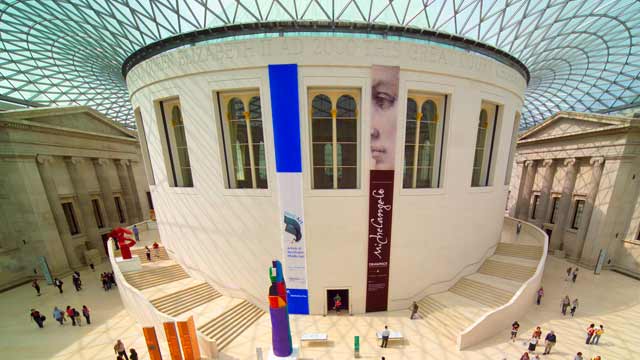
1. British Museum


The world-famous British Museum exhibits the works of man from prehistoric to modern times, from around the world. Highlights include the Rosetta Stone, the Parthenon sculptures and the mummies in the Ancient Egypt collection.

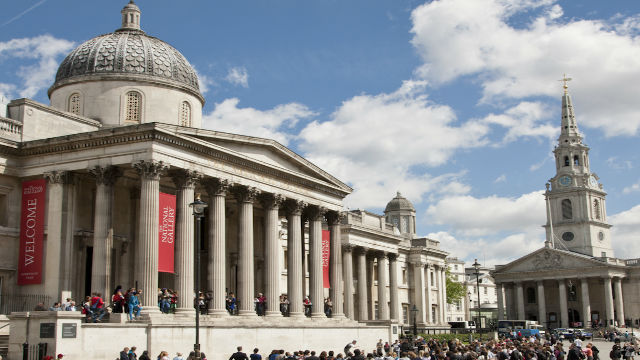
2. National Gallery


The crowning glory of Trafalgar Square, London's National Gallery is a vast space filled with Western European paintings from the 13th to the 19th centuries. In this iconic art gallery you can find works by masters such as Van Gogh, da Vinci, Botticelli, Constable, Renoir, Titian and Stubbs. 

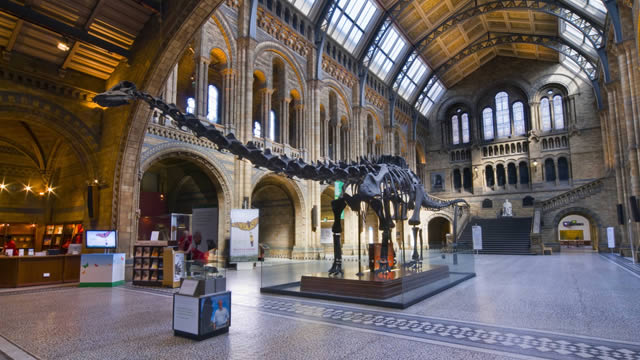
3. Natural History Museum


As well as the permanent (and permanently fascinating!) dinosaur exhibition, the Natural History Museum boasts a collection of the biggest, tallest and rarest animals in the world. See a life-sized blue whale, a 40-million-year-old spider, and the beautiful Central Hall.


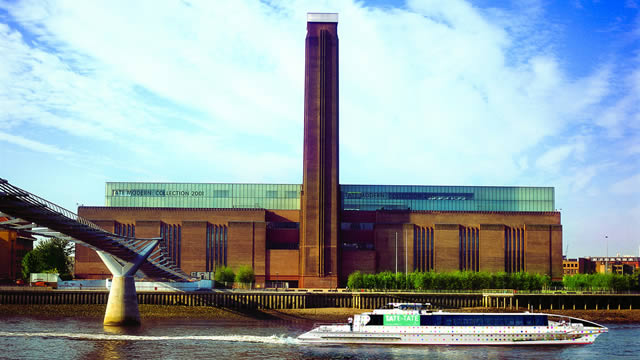
4. Tate Modern


Sitting grandly on the banks of the Thames is Tate Modern, Britain's national museum of modern and contemporary art. Its unique shape is due to it previously being a power station. The gallery's restaurants offer fabulous views across the city

5. Coca-Cola London Eye


The Coca-Cola London Eye is a major feature of London's skyline. It boasts some of London's best views from its 32 capsules, each weighing 10 tonnes and holding up to 25 people. Climb aboard for a breathtaking experience, with an unforgettable perspective of more than 55 of London's most famous landmarks – all in just 30 minutes!

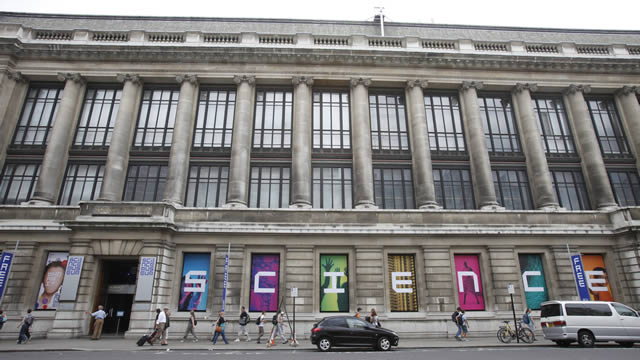
6. Science Museum


From the future of space travel to asking that difficult question: "who am I?", the Science Museum makes your brain perform Olympic-standard mental gymnastics. See, touch and experience the major scientific advances of the last 300 years; and don't forget the awesome Imax cinema.

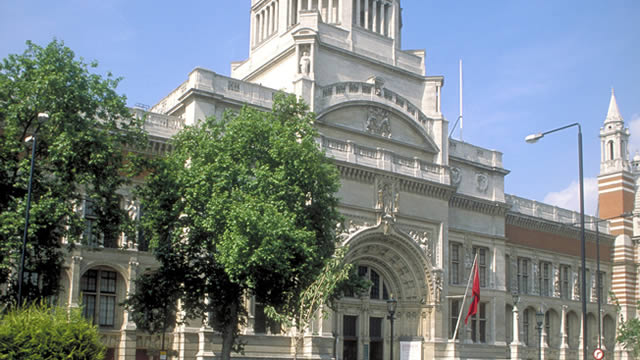
7. Victoria and Albert Museum


The V&A celebrates art and design with 3,000 years' worth of amazing artefacts from around the world. A real treasure trove of goodies, you never know what you'll discover next: furniture, paintings, sculpture, metalwork and textiles

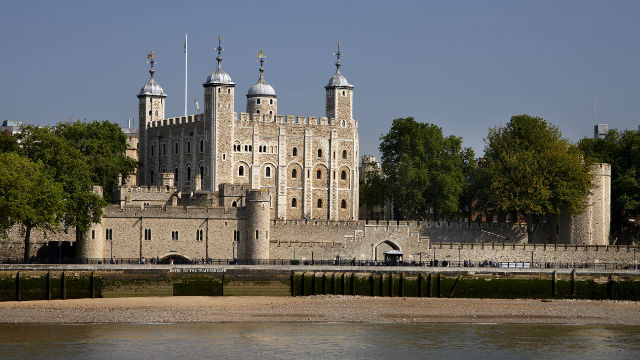
8. Tower of London


Take a tour with one of the Yeoman Warders around the Tower of London, one of the world's most famous buildings. Discover its 900-year history as a royal palace, prison and place of execution, arsenal, jewel house and zoo! Gaze up at the White Tower, tiptoe through a medieval king's bedchamber and marvel at the Crown Jewels

9. Royal Museums Greenwich


Visit the National Maritime Museum - the world's largest maritime museum, see the historic Queen's House, stand astride the Prime Meridian at Royal Observatory Greenwich and explore the famous Cutty Sark: all part of the Royal Museums Greenwich.

10. Madame Tussauds London


At Madame Tussauds, you'll come face-to-face with some of the world's most famous faces. From Shakespeare to Lady Gaga you'll meet influential figures from showbiz, sport, politics and even royalty. Strike a pose with Usain Bolt, get close to One Direction or receive a once-in-a-lifetime audience with Her Majesty the Queen.

Friday, April 3, 2015

What to know before exercising outdoors with allergies


Whatever your preferred outdoor activity, you’re probably itching to do it as winter comes to an end, but the last thing you want is your first spring hike or bike ride to get shut down by allergies. Here’s how to stay healthy on the trail— or the field, or the mountain— when springtime pollen is at your nose.

Start with knowledge

The best way to prepare for outdoor exercise when you have allergies is to know your triggers. If you already know you’re allergic to a certain pollen or mold, that’s a good start. If not, try to remember where you were the last time your allergies flared up. It might have been a certain body of water you ran by, or maybe it was a field along your hiking trail. Avoiding these triggers during the spring is your first line of defense.

If you can’t remember, start noting your flare-ups now, including location, weather, and air quality at the time. “Most people agree that pollen is most irritating when it is dry and windy, which is most likely early afternoon,” says Robert del Junco, medical director of the Nasal & Sinus Center at St. Joseph Hospital in Orange, California. After logging symptoms for a while, you’ll notice patterns and be able to identify triggers for your allergies.


Prepare properly

“Pollen count is highest between 5 a.m. and 10 a.m., and again at dusk, so plan your workouts for other times of the day when pollen levels are lower,” says Tonya Winders, CEO of the Allergy and Asthma Network.
If you’re getting a lot of rain this time of year, head out right after a storm. The rain snags pollen from the air as it falls, so air after rain is usually low in allergens. “It tends to be damper outside in the early morning and in the evenings,” del Junco says.
While these suggestions hold true in general, del Junco warns that there is a lot of conflicting information about when pollen counts are highest. Indeed, the U.S. has a varied climate system, so it’s best to check out what’s going on in your area ahead of time. You can check the air quality and pollen count before you go out by going to pollen.com and airnow.gov. “If you go out during high-pollen times, you can wear a face mask designed to filter out pollens,” Winders says.
Use medications wisely
If your doctor has prescribed a medication for your allergies, or if you have an inhaler for allergy-induced asthma, always use it as prescribed. Many experts recommend using an inhaler about 15 minutes before exercise to minimize the chances of an attack. And of course, if you have a rescue inhaler, don’t forget to bring it with you.

It’s also a good idea to call your doctor’s office and ask about planning your doses around your exercise— especially if your medications make you drowsy. If you have mild allergies that you treat with over-the-counter drugs such as antihistamines that can make you tired, try to take them two or three hours ahead of your activity.
Over-the-counter drugs are usually safe, but don’t overdo it, advises del Junco, who says long-term use can cause negative effects. “You may experience low blood pressure and heart palpitations, as well as occasional periods where it feels like your heart is racing,” he says. Chest tightness, an abnormal heartbeat or restlessness may indicate it’s time to see a physician, he adds.
So how much is too much? “If you require daily over-the-counter medication to alleviate your allergy symptoms, you need to be evaluated by a physician,” del Junco says.

Finish clean


When you get home after an outdoor sweat session, strip down and shower right away, making sure to thoroughly wash your hair. Even a small amount of allergens can cause trouble for hours on end if they’re that close to your face. “As soon as you get home, rinse out your nose with saline to remove pollen,” Winder advises.

If possible, toss those dirty clothes straight into the washing machine so any pollen on them doesn’t fly up when you come back to wash them. “It is also important to remove all exercise clothing from the bedroom and shower before bed to reduce pollens from the sleep zone,” Winder says.
“Try to keep the windows closed and limit exposure to other known allergens as much as possible during the peak of allergy season,” she adds. After all, seasonal allergies can attack at any time, not only when you’re outside.

Thursday, March 26, 2015

Key Benefits of a Party Plan Business

Many men and women are looking for easy ways to add additional income into their homes. 

Whether it is a second job or a part time position that a mum can do from home on the side, a party plan business really is the perfect type of business that will work for most people. 

If you are thinking about adding a side job or a small business, why not think about opening your own party plan business?


Let's look at some of the key benefits to why a party plan business will work for you:

* Flexible Hours - Work when it's convenient for you and your family. You can set up your work schedule to work only on specific days and times of the week, if necessary. This will allow you to take care of your children and to be there when they need you. Or you can choose to work your business around another job that is outside the home.

* Small Investment - Most direct sales companies charge a small fee for an agent’s start-up business kit and/or the lease of a web site. It is an affordable way to start a business.

* Generous Compensation Plan - Most companies pay their agents a generous commission of 25 to 50% plus additional bonuses.

* Multi-Level Compensation Plan - You can earn commission on your downline team sales which varies greatly from company to company. This is an added income stream to the product sales that you generate.

* Quick Return on Your Investment - Since you are making a small investment into the business by just purchasing a consultant start-up business kit and perhaps leasing an online agent web site – your store front - from the company, you can quickly earn back your investment and be making a profit fast.

* Childcare Costs - Most stay at home mums choose to do direct sales so that they have little to no childcare costs. Many mums only do their home parties when their significant other is around to babysit or they have another family member watch the children when they need to conduct their business. This lowers your outgoing expenses so you can make more money.

* No Stress - Since you won't be working in a retail or office environment, many mums find that a party plan business is the way to go when they don't want professional work environment stress in their lives. Be your own boss!

* More Profit - By having a party plan home business, you won't incur the costs of commuting to a job location every day, won't have childcare costs, will save on purchasing lunches, beverages and workplace attire because you will be working from home. This means that more money that you make will be staying in your pocket instead of going out for work-related expenses.

It almost sounds too good to be true! But these key benefits are why the party plan business is such a good fit for mums and families all over the world. Is a party plan right for you? Do you have more questions about the business? Ask us!

Sunday, February 22, 2015

'I'd like to apologise to the entire human race. I have managed to offend everyone': Inside the head of... John Lydon

The wild man of punk is a born survivor: he came through a coma aged seven, narrowly avoided the Lockerbie bombing and is proudest of outliving The Sex Pistols. His dream dinner date? The Queen, of course – ‘there’s so much to sort out there!


What is your earliest memory? My dad holding me in his arms in Highbury Fields, Islington, when I was less than a year old. When Mum went into hospital to give birth to one of my younger brothers, I was left with Dad. 

I remember that moment because we were very close. What sort of child were you? Very quiet and studious. I could read and write by the age of four. 
By 11, I was reading Crime And Punishment. 

I grew up in a poor neighbourhood in north London. Mum was always ill – endless miscarriages didn’t help – and Dad often worked away as a crane driver, so it was my responsibility to look after the household.

 I was botty-wiping for my three younger brothers from an early age, but somebody had to do it and I liked the responsibility. It’s instinctively in me to look out for people. What has been your biggest achievement? Getting my band, Public Image Ltd, together. 

Despite the Sex Pistols falling apart and the ridiculous court cases that ensued, I still managed to form a new band, raise the finances and secure a record deal.
 I’m prouder of that than of anything I did in the Pistols because it came out of a much more difficult situation. And your biggest disappointment? Contracting spinal meningitis when I was seven. 
I developed very bad headaches, dizzy spells, fainting fits and started imagining things – like green dragons breathing fire. 
One morning I blacked out and went into a coma. 

When I woke up in hospital seven months later, I’d lost my use of language. 
I thought I was formulating words, but I was just making noises.

 I lost most of my memory, too. I couldn’t even remember my own name, let alone recognise my parents, and I often forgot my way home from school. Reading in the local library saved me. It seemed to kick-start my memory and I realised I was the same person I had been before I’d lost everything. 

But the pain of that period remains with me. Read more: http://www.dailymail.co.uk/home/event/article-2960103/John-Lydon-says-d-like-apologise-entire-human-race.html#ixzz3STDlPqG5 Follow us: @MailOnline on Twitter | DailyMail on Facebook

Saturday, February 21, 2015

Rita Ora wears the SAME plunging 'The One Show' suit for star-studded Tom Ford event

She famously caused an uproar when she appeared on The One Show in a plunging suit jacket.

And Rita Ora did it again as she attended the Tom Ford Autumn/Winter Womenswear presentation yesterday.
 The singer dared to bare in a the racy white suit jacket which was teamed with matching tailored trousers.
 While her outfit was very unfussy she decided to add some serious drama with very heavy eyemake-up and her short blonde hair slicked back.
 Rita, who is in LA ahead of the Oscars, was joined for the event by a whole host of famous faces including Miley Cyrus and new mum Scarlett Johansson.
 But like many of the stars who attended, it was an early night for Rita ahead of a very exciting weekend.

She famously caused an uproar when she appeared on The One Show in a plunging suit jacket.
And Rita Ora did it again as she attended the Tom Ford Autumn/Winter Womenswear presentation yesterday.
The singer dared to bare in a the racy white suit jacket which was teamed with matching tailored trousers.
Flynet Rita Ora arrives at The Tom Ford show Rita turns heads at The Tom Ford Show
While her outfit was very unfussy she decided to add some serious drama with very heavy eyemake-up and her short blonde hair slicked back.
Rita, who is in LA ahead of the Oscars, was joined for the event by a whole host of famous faces including Miley Cyrus and new mum Scarlett Johansson.
But like many of the stars who attended, it was an early night for Rita ahead of a very exciting weekend.
Getty / Flynet Rita Ora arrives at The Tom Ford show Look at those dramatic eyes Before heading to bed, the 24-year-old shared a picture of herself which she captioned: “Last minute pic till I have to go wash it all off early bed time for me! But wait a minute....”
The pretty blonde will be taking to the stage at the prestigious ceremony on Sunday evening to perform Grateful from Beyond the Lights.
It is one of the five tracks nominated for the best song award at this year’s ceremony. Rita previously told fans she was “excited” about singing at the show.
While the ceremony’s producers Craig Zadan and Neil Meron said: "The mixture of her incredible voice and glamour makes a perfect combination for our show.”

Friday, February 20, 2015

Record cold and snow across many parts of the US


The bitter cold that has gripped the eastern U.S. is showing no sign of letting up before the weekend as low temperatures broke records Friday. The newest band of Arctic air could plunge parts of the Southeast and Mid-Atlantic into deep freezes that haven't been felt since the mid-1990s, according to the National Weather Service. The cold snap followed snow and ice storms earlier in the week. The low temperatures caused much freezing and refreezing of snow, ice and roads. Weather forecasters warn that more sleet and freezing rain will be possible in the coming days.

BARAK OBAMA

Barack Obama

Barack Obama is the 44th and current president of the United States, and the first African American to serve as U.S. president. First elected to the presidency in 2008, he won a second term in 2012.


Synopsis

Born on August 4, 1961, in Honolulu, Hawaii, Barack Obama is the 44th and current president of the United States. He was a civil-rights lawyer and teacher before pursuing a political career. He was elected to the Illinois State Senate in 1996, serving from 1997 to 2004. He was elected to the U.S. presidency in 2008, and won re-election in 2012 against Republican challenger Mitt Romney. President Obama continues to enact policy changes in response to the issues of health care and economic crisis.


Early Life

Barack Hussein Obama was born on August 4, 1961, in Honolulu, Hawaii. His mother, Ann Dunham, grew up in Wichita, Kansas, where her father worked on oil rigs during the Great Depression. After the Japanese attack on Pearl Harbor, Dunham's father, Stanley, enlisted in the service and marched across Europe in Patton's army. Dunham's mother, Madelyn, went to work on a bomber assembly line. After the war, the couple studied on the G.I. Bill, bought a house through the Federal Housing Program and, after several moves, landed in Hawaii.
Barack Obama's father, Barack Obama Sr., was born of Luo ethnicity in Nyanza Province, Kenya. Obama Sr. grew up herding goats in Africa, eventually earning a scholarship that allowed him to leave Kenya and pursue his dreams of college in Hawaii. While studying at the University of Hawaii in Manoa, Obama Sr. met fellow student Ann Dunham, and they married on February 2, 1961. Barack was born six months later.
Obama did not have a relationship with his father as a child. When his son was still an infant, Obama Sr. relocated to Massachusetts to attend Harvard University, pursuing a Ph.D. Barack's parents officially separated several months later and ultimately divorced in March 1964, when their son was 2. In 1965, Obama Sr. returned to Kenya.
In 1965, Dunham married Lolo Soetoro, an East–West Center student from Indonesia. A year later, the family moved to Jakarta, Indonesia, where Barack's half-sister, Maya Soetoro Ng, was born. Several incidents in Indonesia left Dunham afraid for her son's safety and education so, at the age of 10, Barack was sent back to Hawaii to live with his maternal grandparents. His mother and sister later joined them.

Education

While living with his grandparents, Obama enrolled in the esteemed Punahou Academy, excelling in basketball and graduating with academic honors in 1979. As one of only three black students at the school, Obama became conscious of racism and what it meant to be African-American. He later described how he struggled to reconcile social perceptions of his multiracial heritage with his own sense of self: "I began to notice there was nobody like me in the Sears, Roebuck Christmas catalog ... and that Santa was a white man," he said. "I went to the bathroom and stood in front of the mirror with all my senses and limbs seemingly intact, looking the way I had always looked, and wondered if something was wrong with me."
Obama also struggled with the absence of his father, who he saw only once more after his parents divorced, when Obama Sr. visited Hawaii for a short time in 1971. "[My father] had left paradise, and nothing that my mother or grandparents told me could obviate that single, unassailable fact," he later reflected. "They couldn't describe what it might have been like had he stayed."
Ten years later, in 1981, tragedy struck Obama Sr. He was involved in a serious car accident, losing both of his legs as a result. Confined to a wheelchair, he also lost his job. In 1982, Obama Sr. was involved in yet another car accident while traveling in Nairobi. This time, however, the crash was fatal. Obama Sr. died on November 24, 1982, when Barack was 21 years old. "At the time of his death, my father remained a myth to me," Obama later said, "both more and less than a man."
After high school, Obama studied at Occidental College in Los Angeles for two years. He then transferred to Columbia University in New York, graduating in 1983 with a degree in political science. After working in the business sector for two years, Obama moved to Chicago in 1985. There, he worked on the South Side as a community organizer for low-income residents in the Roseland and the Altgeld Gardens communities.

Law Career

It was during this time that Barack Obama, who said he "was not raised in a religious household," joined the Trinity United Church of Christ. He also visited relatives in Kenya, which included an emotional visit to the graves of his biological father and paternal grandfather. "For a long time I sat between the two graves and wept," Obama said. "I saw that my life in America—the black life, the white life, the sense of abandonment I felt as a boy, the frustration and hope I'd witnessed in Chicago—all of it was connected with this small plot of earth an ocean away."
Obama returned from Kenya with a sense of renewal, entering Harvard Law School in 1988. The next year, he met Michelle Robinson, an associate at the Chicago law firm of Sidley Austin. She was assigned to be Obama's adviser during a summer internship at the firm, and not long after, the couple began dating. Their first kiss took place outside of a Chicago shopping center—where a plaque featuring a photo of the couple kissing was installed more than two decades later, in August 2012. In February 1990, Obama was elected the first African-American editor of the Harvard Law Review. He graduated from Harvard, magna cum laude, in 1991.
After law school, Obama returned to Chicago to practice as a civil rights lawyer, joining the firm of Miner, Barnhill & Galland. He also taught part time at the University of Chicago Law School (1992-2004)—first as a lecturer and then as a professor—and helped organize voter registration drives during Bill Clinton's 1992 presidential campaign. On October 3, 1992, he and Michelle were married. They moved to Kenwood, on Chicago's South Side, and welcomed two daughters several years later: Malia (born 1998) and Sasha (born 2001).

Entry Into Illinois Politics

Obama published an autobiography, Dreams From My Father: A Story of Race and Inheritance, in 1995. The work received high praise from literary figures like Toni Morrison and has since been printed in 10 languages, including Chinese, Swedish and Hebrew. The book had a second printing in 2004, and was adapted for a children's version. The 2006 audiobook version of Dreams, narrated by Obama, received a Grammy Award (best spoken word album).
Obama's advocacy work led him to run for a seat in the Illinois State Senate. He ran as a Democrat, and won election in 1996. During these years, Obama worked with both Democrats and Republicans to draft legislation on ethics, and expand health care services and early childhood education programs for the poor. He also created a state earned-income tax credit for the working poor. Obama became chairman of the Illinois Senate's Health and Human Services Committee as well, and after a number of inmates on death row were found innocent, he worked with law enforcement officials to require the videotaping of interrogations and confessions in all capital cases.
In 2000, Obama made an unsuccessful Democratic primary run for the U.S. House of Representatives seat held by four-term incumbent candidate Bobby Rush. Undeterred, he created a campaign committee in 2002, and began raising funds to run for a seat in the U.S. Senate in 2004. With the help of political consultant David Axelrod, Obama began assessing his prospects of a Senate win.
Following the 9/11 attacks in 2001, Obama was an early opponent of President George W. Bush's push to go to war with Iraq. Obama was still a state senator when he spoke against a resolution authorizing the use of force against Iraq during a rally at Chicago's Federal Plaza in October 2002. "I am not opposed to all wars. I'm opposed to dumb wars," he said. "What I am opposed to is the cynical attempt by Richard Perle and Paul Wolfowitz and other arm-chair, weekend warriors in this Administration to shove their own ideological agendas down our throats, irrespective of the costs in lives lost and in hardships borne." Despite his protests, the Iraq War began in 2003.

U.S. Senate Career

Obama, encouraged by poll numbers, decided to run for the U.S. Senate open seat vacated by Republican Peter Fitzgerald. In the 2004 Democratic primary, he won 52 percent of the vote, defeating multimillionaire businessman Blair Hull and Illinois Comptroller Daniel Hynes. That summer, he was invited to deliver the keynote speech in support of John Kerry at the 2004 Democratic National Convention in Boston. Obama emphasized the importance of unity, and made veiled jabs at the Bush Administration and the diversionary use of wedge issues.
After the convention, Obama returned to his U.S. Senate bid in Illinois. His opponent in the general election was supposed to be Republican primary winner Jack Ryan, a wealthy former investment banker. However, Ryan withdrew from the race in June 2004, following public disclosure of unsubstantiated sexual deviancy allegations by Ryan's ex-wife, actress Jeri Ryan.
In August 2004, diplomat and former presidential candidate Alan Keyes accepted the Republican nomination to replace Ryan. In three televised debates, Obama and Keyes expressed opposing views on stem cell research, abortion, gun control, school vouchers and tax cuts. In the November 2004 general election, Obama received 70 percent of the vote to Keyes' 27 percent, the largest electoral victory in Illinois history. With his win, Barack Obama became only the third African-American elected to the U.S. Senate since the Reconstruction.
Sworn into office January 4, 2005, Obama partnered with Republican Senator Richard Lugar of Indiana on a bill that expanded efforts to destroy weapons of mass destruction in Eastern Europe and Russia. Then, with Republican Senator Tom Coburn of Oklahoma, he created a website to track all federal spending. Obama also spoke out for victims of Hurricane Katrina, pushed for alternative energy development, and championed improved veterans' benefits.
His second book, The Audacity of Hope: Thoughts on Reclaiming the American Dream, was published in October 2006. The work discussed Obama's visions for the future of America, many of which became talking points for his eventual presidential campaign. Shortly after its release, it hit No. 1 on both the New York Times and Amazon.com best-seller lists.


Tuesday, February 17, 2015

Travel Quotes

We shall not cease from exploration, and the end of all our exploring will be to arrive where we started and know the place for the first time.


Monday, February 16, 2015

Marinated Roasted Bell Peppers

 This is a simple bell pepper recipe, perfect as an appetizer for French bread slices, or add them to salads, sauces, or sandwiches. The peppers are marinated in a mixture of olive oil, balsamic vinegar, and fresh herbs.

How to Quickly Ripen Bananas

The best way to quickly ripen bananas for eating or slicing is in a paper bag. If you add one or two well-ripened banana or apples to the unripe bananas, the process will go much more quickly. The ethylene gases from the ripened fruit will hasten the ripening. The bananas should be ripe enough to eat in a day or two.
For banana bread or cake, put the unpeeled bananas on a foil-lined baking sheet. Bake at 350° F for 15 to 20 minutes, or until the bananas are completely blackened. Let them cool, scoop the banana from the peel, and mash for banana bread.

Steamed Green Beans

Steaming is a simple way to cook vegetables, and it leaves the flavor intact. These steamed green beans are still bright green and have plenty of fresh flavor. 

Thursday, February 12, 2015

time site

Definition

In the absence of agreement about its meaning, the term "social" is used in many different senses and regarded as a fuzzy concept, referring among other things to: Attitudes, orientations, or behaviors which take the interests, intentions, or needs of other people into account (in contrast to anti-social behaviour) has played some role in defining the idea or the principle. For instance terms like social realism, social justice, social constructivism, social psychology, social anarchism and social capital imply that there is some social process involved or considered, a process that is not there in regular, "non-social" realism, justice, constructivism, psychology, anarchism, or capital. The adjective "social" is also used often in political discourse, although its meaning in a context depends heavily on who is using it. In left-wing circles it is often used to imply a liberal characteristic, while in right-wing circles it is generally used to imply a conservative characteristic. It should also be noted that, overall, this adjective is used much more often by those on the political left than by those on the political right. For these reasons, those seeking to avoid association with the left-right political debates often seek to label their work with phrases that do not include the word "social". An example is quasi-empiricism in mathematics which is sometimes labelled social constructivism by those who see it as an unwarranted intrusion of social considerations in mathematical practice. adjective 1. of or relating to society or its organization. "alcoholism is recognized as a major social problem" synonyms: communal, community, collective, group, general, popular, civil, public, societal "a major social problem" antonyms: individual of or relating to rank and status in society. "a recent analysis of social class in Britain" needing companionship and therefore best suited to living in communities. "we are social beings as well as individuals" relating to or designed for activities in which people meet each other for pleasure. "Guy led a full social life" synonyms: recreational, leisure, entertainment, amusement "a social club" 2. ZOOLOGY (of a bird) gregarious; breeding or nesting in colonies. synonyms: gregarious, interactional; organized "a uniquely social animal" (of an insect) living together in organized communities, typically with different castes, as ants, bees, wasps, and termites do. (of a mammal) living together in groups, typically in a hierarchical system with complex communication. noun noun: social; plural noun: socials 1. an informal social gathering, especially one organized by the members of a particular club or group. "a church social" synonyms: party, gathering, function, get-together, soirée;

Cooking with Nicki

Cooking with Nicki: Chocolate Chip Cookies